How to automate internal support with bots and APIs
Automate internal support with bots and APIs to reduce repetitive tickets, improve HR and IT response times, and scale operations in your agency or startup.
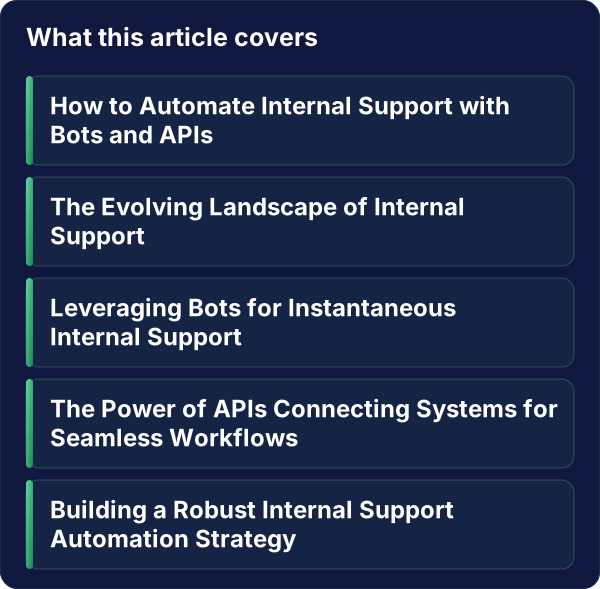
How to Automate Internal Support with Bots and APIs
In today’s fast-paced business environment, efficiency isn’t just a buzzword; it’s a critical driver of growth and success. For agencies and startups, particularly those scaling rapidly, the burden on internal support teams – encompassing IT, HR, and operations – can become overwhelming. Repetitive queries, manual data entry, and time-consuming troubleshooting divert valuable resources from strategic initiatives. This is where the power of automatización soporte interno (internal support automation) truly shines. By strategically implementing bots and APIs, organizations can transform their internal operations, freeing up human capital and dramatically improving employee experience.
This article will explore how product leaders, CTOs, and technology teams can leverage automation to streamline internal support, enhance productivity, and reduce operational overhead. We’ll delve into the practical applications, key benefits, and a roadmap for successful implementation.
The Evolving Landscape of Internal Support
Historically, internal support functions have been largely manual. Employees seeking IT assistance would submit tickets via email or a basic ticketing system. HR inquiries often involved direct contact with department members for policy clarifications or onboarding guidance. While effective to a degree, this model is inherently inefficient and struggles to scale.
Consider the typical scenario: an employee needs to reset their password. This seemingly minor task, when multiplied across hundreds or thousands of employees, consumes significant IT support time. Similarly, HR teams spend countless hours answering common questions about benefits, vacation policies, or payroll. This is where the concept of automatización soporte interno becomes not just beneficial, but essential.
The modern workforce expects seamless, on-demand support. They are accustomed to the instant gratification of consumer-facing applications and expect the same level of responsiveness from their internal tools. Failing to meet these expectations can lead to decreased employee satisfaction, reduced productivity, and even higher attrition rates.
Leveraging Bots for Instantaneous Internal Support
Chatbots and virtual assistants are at the forefront of automatización soporte interno. These AI-powered tools can handle a vast array of common queries and tasks, providing instant responses 24/7. For IT and HR operations, bots offer a powerful first line of defense against an overwhelming volume of requests.
IT Support Automation with Bots
- Password Resets and Account Unlocks: This is a prime candidate for bot automation. A chatbot can guide users through a secure self-service password reset process or unlock accounts based on pre-defined security protocols. This alone can reduce IT ticket volume by 30-50%.
- Software Installation and Configuration: Bots can initiate automated software installations or guide users through basic configuration steps, reducing the need for manual intervention.
- Troubleshooting Common Issues: For frequently encountered problems (e.g., printer connectivity, VPN issues), bots can run diagnostic scripts, provide step-by-step solutions, and escalate complex issues to human agents with relevant context.
- Hardware Request and Tracking: Employees can request new hardware through a bot, which can then trigger approval workflows and update inventory systems.
- Knowledge Base Navigation: Bots can act as intelligent search engines for your internal knowledge base, helping employees find answers quickly without sifting through documentation.
Key Metric: First Response Time (FRT) for common IT queries. Automating these can reduce FRT from hours to seconds, significantly improving employee perception of IT support.
HR Support Automation with Bots
- Answering Policy Questions: Bots can be trained on company policies, handbooks, and FAQs to provide instant answers regarding vacation, sick leave, benefits, expense reporting, and more.
- Onboarding and Offboarding Assistance: Bots can guide new hires through initial paperwork, introduce them to company culture, and provide checklists for their first few weeks. For offboarding, they can initiate processes like equipment return and access revocation.
- Leave Requests and Approvals: Bots can facilitate the submission and initial approval of leave requests, streamlining the process for both employees and managers.
- Payroll and Benefits Inquiries: While sensitive data requires careful handling, bots can provide general information about payroll schedules, direct employees to relevant HR portals, or initiate requests for specific information.
- Internal Surveys and Feedback Collection: Bots can be used to conduct quick pulse surveys or gather feedback on specific initiatives, providing valuable insights without manual outreach.
Key Metric: Employee Satisfaction Score (ESSS) related to HR support. By providing instant, accurate answers, bots can boost this metric considerably.
The Power of APIs: Connecting Systems for Seamless Workflows
While bots handle direct employee interactions, APIs (Application Programming Interfaces) are the unsung heroes of automatización soporte interno. APIs act as bridges, allowing different software applications to communicate and exchange data. This interconnectivity is crucial for automating complex, multi-step processes that go beyond simple Q&A.
Integrating Ticketing Systems with Communication Platforms
Imagine an employee submitting an IT issue via Slack or Microsoft Teams. An API can instantly create a ticket in your IT Service Management (ITSM) platform (e.g., Jira Service Management, Zendesk). The bot can then acknowledge the ticket creation within the communication platform, providing the employee with a ticket number and an estimated resolution time.
- Workflow Example:
- Employee messages a dedicated IT bot in Slack: “My laptop is running very slow.”
- The bot, via API, creates a new ticket in Jira Service Management with the subject “Slow Laptop Performance” and assigns it to the IT support queue.
- The bot responds to the employee in Slack: “I’ve created ticket #12345 for your slow laptop. Our team will investigate shortly.”
Key Metric: Ticket Resolution Time. By automating ticket creation and initial triage, APIs can significantly reduce the time it takes for an issue to be assigned and worked on.
Automating HR Workflows with API Integrations
- HRIS to Payroll Integration: When an employee’s status changes (e.g., promotion, salary adjustment), an API can automatically update the HR Information System (HRIS) and trigger corresponding changes in the payroll system, minimizing manual data entry errors.
- Onboarding Automation: New hire data entered into an HR system can be automatically used via APIs to:
- Create user accounts in Active Directory or Okta.
- Provision access to relevant software applications (e.g., Google Workspace, Microsoft 365, Slack).
- Trigger welcome emails and onboarding task assignments.
- Expense Management Automation: APIs can connect expense reporting tools with accounting software, automatically categorizing expenses and initiating reimbursement processes.
Key Metric: Time to Onboard. Automating these processes can reduce the time it takes for a new employee to be fully productive from days to hours.
Building a Robust Internal Support Automation Strategy
Implementing automatización soporte interno requires a strategic approach, not just a collection of disparate tools. It’s about creating a cohesive ecosystem that enhances both employee experience and operational efficiency.
Identifying High-Impact Automation Opportunities
The first step is to analyze your current internal support processes. Where are the bottlenecks? What tasks are repetitive and time-consuming?
- Data Collection: Gather data on ticket volumes, resolution times, common query types, and employee feedback.
- Process Mapping: Visually map out key internal support workflows for IT and HR.
- Prioritization: Focus on areas with the highest potential ROI, such as high-volume, low-complexity tasks. Password resets, common HR policy questions, and basic IT troubleshooting are excellent starting points.
Choosing the Right Technology Stack
The selection of tools is critical. Consider:
- Chatbot Platforms: Look for platforms that offer natural language processing (NLP), easy integration capabilities, and robust analytics. Examples include Intercom, Drift, Zendesk Answer Bot, or custom solutions built on cloud AI services.
- API Integration Tools: Platforms like Zapier, Make (formerly Integromat), or custom API development can connect your existing systems.
- ITSM and HRIS Systems: Ensure your core systems are API-enabled and can be integrated with automation tools.
- Communication Platforms: Leverage your existing tools like Slack, Microsoft Teams, or Google Chat.
Designing User-Centric Automation Flows
Automation should simplify, not complicate, the employee experience.
- Intuitive Interfaces: Bots should be easy to interact with, using natural language.
- Clear Escalation Paths: Ensure employees can easily reach a human agent when the bot cannot resolve their issue.
- Feedback Loops: Implement mechanisms for users to provide feedback on their automated support experience.
Key Benefits of Internal Support Automation
The advantages of adopting automatización soporte interno are multifaceted and directly impact your organization’s bottom line and employee morale.
- Increased Efficiency and Productivity: By automating routine tasks, your IT and HR teams can focus on more strategic, high-value work. Employees spend less time waiting for answers and more time being productive.
- Reduced Operational Costs: Automating support reduces the need for additional headcount to manage growing query volumes. It also minimizes the cost associated with manual errors and rework.
- Enhanced Employee Experience: Instant, accurate support leads to higher employee satisfaction. A smooth onboarding process, quick access to information, and rapid issue resolution contribute to a positive work environment.
- 24/7 Availability: Bots and automated systems provide support around the clock, regardless of time zones or office hours, which is crucial for global or remote teams.
- Scalability: As your agency or startup grows, automated systems can scale effortlessly to handle increased demand without a proportional increase in human resources.
- Data-Driven Insights: Automation tools often provide analytics on query types, resolution rates, and user satisfaction, offering valuable insights for continuous improvement.
Key Performance Indicators (KPIs) to Track:
- Ticket Deflection Rate: The percentage of issues resolved by automation without human intervention.
- Average Handling Time (AHT): For automated interactions, this should be near-instantaneous. For escalated issues, a reduction in AHT is a key goal.
- Employee Satisfaction Score (ESS): Measure how employees feel about the internal support they receive.
- Cost Per Ticket: Track the reduction in cost as automation takes over.
- Time to Resolution: For both automated and human-handled tickets.
Integrations: A Checklist for Success
Successfully integrating automation tools requires careful planning and execution. Here’s a checklist to guide your implementation:
Phase 1: Planning and Assessment
- Identify Key Stakeholders: Involve IT, HR, Operations, and relevant department heads.
- Define Goals and Objectives: What specific improvements are you aiming for (e.g., reduce ticket volume by X%, improve ESS by Y%)?
- Map Current Processes: Document existing workflows for IT and HR support.
- Analyze Pain Points: Identify the most time-consuming, repetitive, and error-prone tasks.
- Assess Existing Technology Stack: Evaluate current ITSM, HRIS, communication, and productivity tools for API capabilities.
- Budget Allocation: Determine the budget for automation tools and implementation.
Phase 2: Tool Selection and Design
- Research and Select Bot Platform(s): Consider NLP capabilities, integration options, and ease of use.
- Research and Select API Integration Tools/Methods: Evaluate platforms like Zapier, Make, or the need for custom development.
- Design Bot Personas and Conversation Flows: Create natural, helpful, and on-brand interactions.
- Define API Integration Points: Identify which systems need to communicate and what data needs to be exchanged.
- Develop Escalation Protocols: Clearly define when and how a bot should hand off a request to a human agent.
Phase 3: Implementation and Testing
- Configure Bot(s): Train bots with relevant knowledge base articles, FAQs, and common query responses.
- Develop API Integrations: Build and test connections between systems.
- Pilot Testing: Roll out automation to a small group of users to gather feedback and identify bugs.
- Iterate Based on Feedback: Make necessary adjustments to bot responses and integration logic.
- Develop Training Materials: Prepare guides for employees on how to use the new automated support channels.
Phase 4: Deployment and Optimization
- Full Rollout: Deploy automation to the entire organization.
- Monitor Performance: Continuously track KPIs and system performance.
- Gather Ongoing Feedback: Collect employee input through surveys and direct channels.
- Regularly Update Knowledge Base: Ensure bot knowledge remains current.
- Analyze Data for Optimization: Use insights to refine bot conversations, improve integrations, and identify new automation opportunities.
- Stay Abreast of New Technologies: Explore advancements in AI and automation to further enhance your support ecosystem.
Conclusion: The Future of Internal Support is Automated
The journey towards automatización soporte interno is not just about adopting new technologies; it’s about a fundamental shift in how organizations manage their internal operations and support their most valuable asset – their people. By strategically implementing bots and APIs, agencies and startups can unlock unprecedented levels of efficiency, reduce costs, and cultivate a more positive and productive work environment.
For product leaders, CTOs, and technology teams looking to gain a competitive edge, embracing internal support automation is no longer an option, but a necessity. It’s about building a resilient, scalable, and employee-centric operational backbone that supports innovation and growth.
Looking to reduce manual work in internal support? Alken designs and implements API integrations and automations that connect your support tools with the rest of your stack.
Reach out at info@alken.dev to discuss your case.