Core Web Vitals: quick playbook for product leaders
Master Core Web Vitals with a practical playbook for product leaders. Improve LCP, INP, and CLS to boost UX, conversion, and SEO for your B2B SaaS.
Core Web Vitals: A Quick Playbook for Product Leaders
In today’s hyper-competitive digital landscape, user experience (UX) isn’t just a nice-to-have; it’s a critical differentiator, especially for B2B software. For product leaders, CTOs, and technology teams, understanding and optimizing for Core Web Vitals (CWV) is no longer optional. Google’s emphasis on these metrics signifies a fundamental shift: a faster, more stable, and interactive web is paramount. This playbook is designed to equip you with the knowledge and actionable steps to not only understand CWV but to master them, ultimately driving better user engagement, higher conversion rates, and improved search engine rankings for your SaaS product.
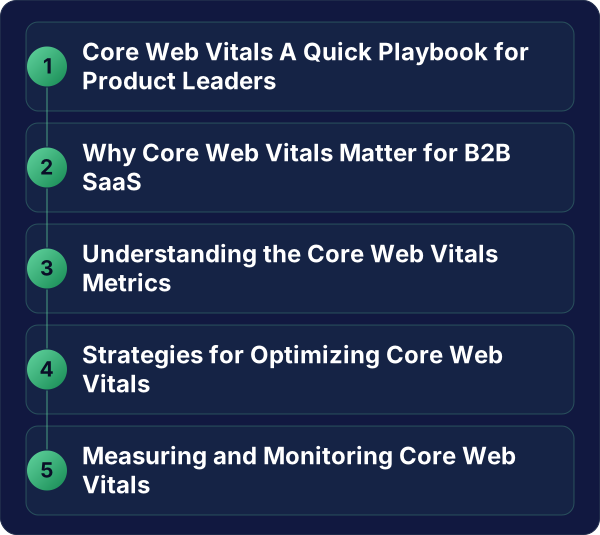
Why Core Web Vitals Matter for B2B SaaS
Core Web Vitals are a set of user-centric metrics defined by Google that measure key aspects of the user experience: loading performance, interactivity, and visual stability. They are a direct signal to search engines about the quality of your website or application from a user’s perspective. For B2B software, this translates into tangible business benefits.
- Improved User Acquisition: Higher search engine rankings mean more organic traffic. When potential clients search for solutions like yours, a well-optimized site will appear higher, driving more qualified leads.
- Enhanced User Retention and Engagement: A slow or janky user experience can frustrate even the most determined prospect or existing customer. Fast loading times and smooth interactions lead to increased time spent on your platform, deeper feature exploration, and ultimately, higher customer satisfaction.
- Reduced Bounce Rates: Users are impatient. If your product takes too long to load or feels unresponsive, they will leave. Optimizing CWV directly combats high bounce rates, keeping users engaged with your offering.
- Competitive Advantage: In a crowded market, even minor improvements in UX can set you apart. Demonstrating a commitment to a superior user experience through CWV optimization signals professionalism and attention to detail.
- Direct Impact on Conversion Rates: Whether it’s signing up for a demo, completing a trial, or making a purchase, every step in your user journey is affected by performance. Faster, more stable experiences remove friction and encourage users to complete desired actions.
Google uses CWV as a ranking factor, meaning that a better CWV score can directly improve your SEO performance. This is particularly important for B2B SaaS, where organic search is a significant channel for lead generation.
Understanding the Core Web Vitals Metrics
The three primary Core Web Vitals are:
Largest Contentful Paint (LCP)
What it measures: LCP measures loading performance. It marks the point in the page load timeline when the largest content element (typically an image or a block of text) within the viewport becomes visible to the user.
Why it’s important: A good LCP ensures that users perceive your page as loading quickly. If the main content takes too long to appear, users might assume the page is broken and leave.
Ideal Thresholds:
- Good: 2.5 seconds or less
- Needs Improvement: 2.5 to 4 seconds
- Poor: Over 4 seconds
First Input Delay (FID)
What it measures: FID measures interactivity. It quantizes the experience of a user’s first interaction with your page (e.g., clicking a button, tapping a link) and the time it takes for the browser to respond to that interaction. A high FID means the page is unresponsive.
Why it’s important: Users expect immediate feedback when they interact with a website. A delay in response can lead to frustration and a feeling that the application is not working correctly.
Ideal Thresholds:
- Good: 100 milliseconds or less
- Needs Improvement: 100 to 300 milliseconds
- Poor: Over 300 milliseconds
Note: FID is being replaced by the more robust Interaction to Next Paint (INP) metric starting March 12, 2024. While FID is still relevant for historical data, INP will become a key CWV metric. INP measures the latency of all interactions a user has with a page, providing a more comprehensive view of responsiveness.
Cumulative Layout Shift (CLS)
What it measures: CLS measures visual stability. It quantifies how often users experience unexpected layout shifts. This happens when elements on a page move around unexpectedly, forcing the user to reorient themselves.
Why it’s important: Unexpected shifts can cause users to accidentally click on the wrong element, leading to a frustrating experience. Imagine trying to click a “Sign Up” button only for it to move just as your finger is about to tap it.
Ideal Thresholds:
- Good: 0.1 or less
- Needs Improvement: 0.1 to 0.25
- Poor: Over 0.25
Strategies for Optimizing Core Web Vitals
Optimizing for Core Web Vitals requires a multi-faceted approach, focusing on both front-end and back-end improvements.
Optimizing Largest Contentful Paint (LCP)
The goal here is to ensure your main content loads as quickly as possible.
- Optimize Server Response Time:
- Faster Hosting: Consider upgrading your hosting plan or using a Content Delivery Network (CDN) to serve assets closer to your users.
- Database Optimization: Efficient database queries and indexing can significantly reduce server response times.
- Caching: Implement effective server-side caching to serve pre-rendered content.
- Eliminate Render-Blocking Resources:
- Defer JavaScript: Use
deferorasyncattributes for JavaScript tags that are not critical for initial rendering. - Minify and Compress CSS/JavaScript: Reduce file sizes to speed up download times.
- Critical CSS: Inline critical CSS needed for above-the-fold content and defer the rest.
- Defer JavaScript: Use
- Optimize Images and Media:
- Compress Images: Use tools to compress images without significant loss of quality.
- Responsive Images: Serve appropriately sized images for different screen resolutions using
<picture>elements orsrcset. - Lazy Loading: Implement lazy loading for images and videos that are below the fold.
- WebP Format: Utilize modern image formats like WebP, which offer better compression than JPEG or PNG.
- Preload Key Resources: Use
<link rel="preload">to tell the browser to fetch critical resources (like fonts or hero images) early in the loading process.
Optimizing First Input Delay (FID) / Interaction to Next Paint (INP)
The focus is on making your application responsive to user interactions.
- Break Up Long Tasks:
- JavaScript Execution: Long-running JavaScript tasks can block the main thread, preventing the browser from responding to user input. Break these tasks into smaller, asynchronous chunks using
setTimeoutorrequestIdleCallback. - Code Splitting: Load JavaScript only when it’s needed, reducing the initial amount of code the browser has to parse and execute.
- JavaScript Execution: Long-running JavaScript tasks can block the main thread, preventing the browser from responding to user input. Break these tasks into smaller, asynchronous chunks using
- Optimize Third-Party Scripts:
- Audit and Remove: Regularly review third-party scripts (analytics, ads, widgets) and remove any that are not essential or are negatively impacting performance.
- Asynchronous Loading: Ensure non-critical third-party scripts are loaded asynchronously.
- Efficient DOM Manipulation:
- Minimize DOM Changes: Frequent and complex DOM manipulations can be resource-intensive. Batch updates where possible.
- Web Workers: For computationally intensive tasks that don’t require direct DOM access, consider using Web Workers to run them in a separate thread.
- Optimize Event Handlers:
- Debouncing and Throttling: For events that fire rapidly (like scrolling or resizing), use debouncing or throttling to limit the number of times the event handler is executed.
Optimizing Cumulative Layout Shift (CLS)
The goal is to prevent unexpected movement of page elements.
- Specify Dimensions for Media:
- Images and Videos: Always include
widthandheightattributes for your<img>and<video>tags. This allows the browser to reserve space for the element before it loads, preventing layout shifts. - If dimensions are dynamic: Use CSS
aspect-ratioproperty to reserve space.
- Images and Videos: Always include
- Avoid Inserting Content Dynamically Above Existing Content:
- Ads and Banners: If you must insert dynamic content (like ads), ensure it’s done in a way that doesn’t push existing content down. Reserve space for them beforehand.
- User-Generated Content: If displaying user-generated content, pre-allocate space for it.
- Use CSS
transformandopacityfor Animations: These properties are often more performant and less likely to trigger layout shifts compared to animating properties likemarginorwidth. - Font Loading Strategy:
font-display: swap: Use this CSS property for fonts. It tells the browser to use a fallback font while the custom font is loading, and then swap it in. This prevents invisible text (FOIT) which can cause layout shifts.- Preload Fonts: Preload critical font files to ensure they are available early.
Measuring and Monitoring Core Web Vitals
Accurate measurement is key to understanding your performance and tracking improvements.
Tools for Measurement
- Google Search Console: Provides real-time CWV data for your site, categorized by mobile and desktop. It highlights URLs that need improvement. This is your primary source for understanding how Google perceives your site’s performance.
- PageSpeed Insights: Offers both lab data (simulated performance) and field data (real-user metrics from the Chrome User Experience Report) for a given URL. It provides specific recommendations for improvement.
- Chrome DevTools (Lighthouse): The “Lighthouse” tab in Chrome DevTools allows you to audit your page for performance, accessibility, SEO, and CWV in a simulated environment. This is invaluable for local testing and debugging.
- WebPageTest: A powerful tool for detailed performance analysis from various locations and browsers.
- Real User Monitoring (RUM) Tools: Solutions like Datadog, New Relic, or Sentry provide continuous monitoring of CWV based on actual user interactions, offering a true picture of your users’ experience.
Setting Up a Monitoring Workflow
- Establish Baselines: Use the tools above to get an initial understanding of your current CWV scores.
- Prioritize Issues: Focus on the metrics that are “Poor” or “Needs Improvement” first. Address the most impactful issues for your target audience.
- Implement Changes Incrementally: Make one or a few changes at a time and re-measure to understand the impact of each optimization.
- Regularly Monitor: CWV is not a one-time fix. User behavior, content updates, and third-party integrations can all affect performance. Set up regular monitoring, ideally with RUM tools.
- Integrate into Development Process: Make CWV a part of your development lifecycle. Include performance checks in your CI/CD pipeline and set performance budgets.
Real-World Impact: Case Study Snippets
While specific data varies, companies that have successfully optimized their Core Web Vitals often see significant improvements:
- E-commerce Retailers: Have reported reductions in bounce rates by up to 20% and increases in conversion rates by 5-10% after improving LCP and FID.
- Publishing Sites: Have seen increases in page views per session by 15% and time on site by 10% by ensuring a stable and interactive experience.
- SaaS Platforms: Early adopters have noted that improved loading times and responsiveness lead to higher trial-to-paid conversion rates and decreased customer support tickets related to slow performance.
For B2B SaaS, a fast and stable product translates directly into a more professional and reliable perception, which is crucial for building trust with enterprise clients.
Core Web Vitals Checklist for Product Leaders
This checklist provides a structured approach to assessing and improving your product’s Core Web Vitals.
LCP (Largest Contentful Paint)
- Server Response Time:
- Is hosting adequate? Consider CDN.
- Are database queries optimized?
- Is server-side caching implemented effectively?
- Render-Blocking Resources:
- Is non-critical JavaScript deferred (
defer/async)? - Are CSS and JavaScript minified and compressed?
- Is critical CSS inlined?
- Is non-critical JavaScript deferred (
- Images & Media:
- Are images compressed?
- Are responsive images used (
srcset,<picture>)? - Is lazy loading implemented for below-the-fold content?
- Are modern image formats (WebP) utilized?
- Resource Preloading:
- Are critical resources (fonts, hero images) preloaded?
FID / INP (First Input Delay / Interaction to Next Paint)
- Long Tasks:
- Are long JavaScript tasks broken down?
- Is code splitting implemented?
- Third-Party Scripts:
- Are non-essential third-party scripts audited and removed?
- Are essential third-party scripts loaded asynchronously?
- DOM Manipulation:
- Are DOM manipulations batched where possible?
- Are Web Workers used for heavy computations?
- Event Handlers:
- Are debouncing/throttling used for rapid events?
CLS (Cumulative Layout Shift)
- Media Dimensions:
- Do images and videos have
widthandheightattributes? - Is
aspect-ratioused for dynamic media?
- Do images and videos have
- Dynamic Content Insertion:
- Is space reserved for ads, banners, or dynamic content?
- Is dynamic content avoided from inserting above existing content?
- Animations:
- Are CSS
transformandopacityused for animations?
- Are CSS
- Font Loading:
- Is
font-display: swapused for fonts? - Are critical fonts preloaded?
- Is
Monitoring & Process
- Measurement Tools:
- Is Google Search Console regularly reviewed?
- Are PageSpeed Insights used for specific URL analysis?
- Is Lighthouse used for local audits?
- Is a RUM solution in place for continuous monitoring?
- Workflow:
- Are baselines established?
- Are issues prioritized?
- Are changes implemented and measured incrementally?
- Is performance integrated into the CI/CD pipeline?
Conclusion: Elevating Your B2B SaaS with Core Web Vitals
Mastering Core Web Vitals is not just about appeasing Google; it’s about delivering a superior user experience that directly impacts your bottom line. For product leaders and technology teams in the B2B SaaS space, a high-performing, stable, and interactive product is a competitive imperative. By systematically addressing LCP, FID/INP, and CLS, you can unlock significant gains in user acquisition, retention, and overall customer satisfaction.
The journey to optimized Core Web Vitals requires a data-driven approach, continuous monitoring, and a commitment to iterative improvement. It’s an investment that pays dividends in user trust, engagement, and ultimately, business growth.
Struggling with LCP or CLS in production? Alken’s web development includes Core Web Vitals as a delivery requirement — Lighthouse CI runs on every pull request so no regression reaches production.
Reach out at info@alken.dev to review your site’s metrics.