Legacy Software Maintenance: ROI Breakdown & When to Rebuild
Maintain or rebuild legacy software? Cost-benefit analysis, ROI frameworks and strategies to keep systems running without costly rewrites.
In the fast-paced world of technology, the term “legacy software” often conjures images of outdated, inefficient, and costly systems. It’s a label that can strike fear into the hearts of product leaders and CTOs, leading to an immediate impulse to discard and rebuild. However, this knee-jerk reaction can be a costly mistake. Far from being a drain on resources, strategically maintaining legacy software can be a shrewd business decision, preserving critical functionality, protecting investments, and even unlocking new opportunities.
For many agencies and startups, particularly those that have experienced significant growth, legacy systems are the backbone of their operations. These systems, often built years ago, may still perform core functions flawlessly, handle vast amounts of data, and are deeply integrated into business processes. The cost and complexity of a complete rip-and-replace can be prohibitive, leading to significant disruption, potential data loss, and a prolonged period of reduced productivity.
This article will challenge the conventional wisdom surrounding legacy software. We’ll explore why maintaining these systems isn’t necessarily “burning money” but can, in fact, be a strategic imperative. We’ll delve into the tangible benefits, effective management strategies, and the nuanced approach to modernization that can preserve value while preparing for the future.
The Hidden Value Proposition of Legacy Systems
The perception of legacy software as inherently problematic often overshadows its inherent value. These systems are not just old; they are proven. They have weathered the storms of market changes, evolved with user needs, and have likely been the engine of revenue generation for years.
Proven Functionality and Stability
- Core Business Operations: Many legacy systems are responsible for mission-critical functions such as accounting, customer relationship management (CRM), enterprise resource planning (ERP), and core product delivery mechanisms. Replacing these without meticulous planning can halt operations entirely.
- Data Integrity: Years of data accumulation within a legacy system represent a valuable historical record. Migrating this data is not a trivial task and carries inherent risks of corruption or loss. Maintaining the existing system ensures data continuity.
- User Familiarity and Training: Employees are often highly proficient with existing legacy systems. The learning curve and retraining costs associated with new software can be substantial, impacting productivity and morale.
Return on Investment (ROI)
A significant investment has already been made in the development, implementation, and refinement of these systems. Continually leveraging this investment through effective maintenance ensures a longer ROI period. Instead of writing off past expenditure, you are maximizing its utility.
Competitive Advantage
In niche markets or highly specialized industries, legacy systems may possess unique functionalities that competitors have not replicated. Abandoning these could mean losing a competitive edge.
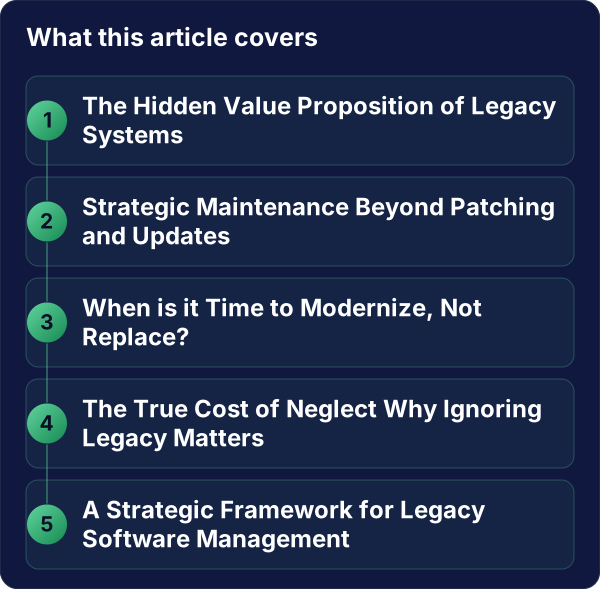
Strategic Maintenance: Beyond Patching and Updates
Effective maintenance of legacy software goes far beyond simply applying security patches or fixing bugs. It involves a proactive, strategic approach that ensures the system remains functional, secure, and aligned with evolving business needs.
Proactive Monitoring and Performance Optimization
- Key Performance Indicators (KPIs): Regularly monitor system performance against established KPIs such as uptime, response times, transaction processing speed, and resource utilization. Deviations can indicate potential issues before they become critical. For example, a sudden increase in server load or a decrease in transaction throughput could signal an impending problem.
- Predictive Maintenance: Utilize tools and techniques to predict potential hardware or software failures. This allows for planned interventions rather than costly emergency fixes.
- Resource Management: Optimize hardware and software resources to ensure efficient operation and prevent bottlenecks. This might involve tuning databases, optimizing code, or upgrading specific components.
Security and Compliance
Legacy systems can be vulnerable to modern cyber threats if not properly secured.
- Regular Audits: Conduct frequent security audits to identify and address vulnerabilities. This includes penetration testing and code reviews.
- Access Control and Authentication: Implement robust access control mechanisms and multi-factor authentication to protect sensitive data.
- Compliance Updates: Ensure the system adheres to relevant industry regulations and data privacy laws (e.g., GDPR, CCPA). This may involve implementing new data handling procedures or updating logging mechanisms.
Documentation and Knowledge Transfer
A common pitfall with legacy systems is the loss of institutional knowledge.
- Comprehensive Documentation: Maintain up-to-date documentation of the system’s architecture, code, dependencies, and operational procedures.
- Knowledge Silos: Actively work to break down knowledge silos by cross-training team members and creating accessible knowledge bases. This is crucial as long-term developers may retire or move on.
When is it Time to Modernize, Not Replace?
While maintaining legacy software is often a sound strategy, there comes a point where modernization becomes necessary. The key is to distinguish between maintaining a functional system and clinging to an obsolete one. Modernization is about evolving the system, not necessarily discarding it entirely.
Identifying Modernization Triggers
- End-of-Life Components: When critical third-party libraries, operating systems, or hardware components reach their end-of-life and are no longer supported, security risks increase dramatically.
- Scalability Limitations: If the system can no longer scale to meet growing business demands, impacting performance and user experience, modernization is required.
- Integration Challenges: Difficulty in integrating the legacy system with newer technologies or third-party services can hinder innovation and operational efficiency.
- High Maintenance Costs: When the cost of maintaining the legacy system (e.g., specialized developer salaries, frequent emergency fixes) begins to outweigh the benefits, it’s a strong indicator for modernization.
- Lack of Agility: If the system is so rigid that it prevents the business from adapting quickly to market changes or launching new features, its modernization is essential.
Modernization Strategies: A Phased Approach
Rather than a “big bang” replacement, consider a phased modernization approach. This minimizes risk and allows for continuous value delivery.
1. Encapsulation and API Development
- Concept: Wrap the legacy system’s core functionalities with modern APIs. This allows new applications and services to interact with the legacy system without direct modification of its core code.
- Benefits: Enables incremental development of new features, improves integration capabilities, and provides a bridge to future technologies.
- Example: A company with an old, but stable, order processing system can build a new e-commerce front-end that communicates with the legacy system via APIs, abstracting away the complexities of the old architecture.
2. Component Re-platforming or Re-architecting
- Concept: Identify specific modules or components within the legacy system that are bottlenecks or require significant updates. These can be re-written or re-architected using modern technologies while keeping the rest of the system intact.
- Benefits: Addresses specific pain points, improves performance and scalability of critical functions, and allows for the gradual introduction of modern technologies.
- Example: A financial institution might re-architect its transaction processing module to leverage microservices for better scalability and resilience, while the core account management system remains untouched.
3. Data Modernization
- Concept: Migrate critical data to modern databases or data lakes, while the application logic might still reside in the legacy system or be gradually modernized.
- Benefits: Improves data accessibility, enables advanced analytics, and sets the stage for future data-driven initiatives.
- Example: Moving customer data from a legacy relational database to a cloud-based data warehouse for more sophisticated reporting and AI-driven insights.
The True Cost of Neglect: Why Ignoring Legacy Matters
While maintaining legacy software can be cost-effective, neglecting it entirely can lead to far greater expenses and risks. The perceived savings from avoiding maintenance are often illusory.
Escalating Technical Debt
Ignoring necessary updates and refactoring leads to a buildup of technical debt. This debt makes future changes more difficult, time-consuming, and expensive. The longer it’s ignored, the more it compounds.
Increased Security Vulnerabilities
Outdated software is a prime target for cyberattacks. A single breach can result in:
- Financial Losses: Direct costs from data recovery, regulatory fines, and potential lawsuits.
- Reputational Damage: Loss of customer trust, which can be irreparable and impact future revenue.
- Operational Disruption: Downtime can cripple business operations, leading to significant lost revenue and customer dissatisfaction.
Missed Opportunities
Legacy systems often lack the flexibility to adopt new technologies or integrate with modern platforms. This can prevent businesses from:
- Innovating: Launching new products or services that rely on modern tech stacks.
- Improving Customer Experience: Offering seamless digital interactions or personalized services.
- Gaining Competitive Insights: Leveraging advanced analytics or AI.
Inability to Attract and Retain Talent
Developers often prefer working with modern technologies. A codebase riddled with outdated languages and frameworks can make it difficult to attract top talent and may lead to the departure of existing skilled personnel.
A Strategic Framework for Legacy Software Management
Effectively managing legacy software requires a structured approach. This framework can help organizations make informed decisions about maintenance and modernization.
Step 1: Comprehensive Assessment
- Inventory: Document all legacy systems, their criticality, dependencies, and current state.
- Risk Analysis: Identify security, operational, and technical risks associated with each system.
- Cost-Benefit Analysis: Evaluate the ongoing maintenance costs versus the potential costs and benefits of modernization or replacement.
- Business Alignment: Understand how each legacy system supports current and future business objectives.
Step 2: Prioritization
- Criticality: Focus on systems that are essential for core business operations and revenue generation.
- Risk Level: Address systems with the highest security or operational risks first.
- Modernization Potential: Identify systems that offer the greatest return on investment through modernization.
Step 3: Develop a Roadmap
- Phased Approach: Outline a clear, phased plan for maintenance, modernization, or eventual replacement.
- Resource Allocation: Define the budget, personnel, and tools required for each phase.
- Timeline: Set realistic timelines for achieving key milestones.
Step 4: Execution and Iteration
- Agile Methodologies: Employ agile development practices for modernization efforts to ensure flexibility and continuous feedback.
- Continuous Monitoring: Regularly monitor system performance, security, and business impact.
- Adaptation: Be prepared to adapt the roadmap based on new information or changing business priorities.
Conclusion: Legacy as a Launchpad, Not a Liability
The narrative around legacy software is often one of burden and obsolescence. However, by adopting a strategic, data-driven approach, product leaders, CTOs, and technology teams can transform these systems from liabilities into valuable assets. Effective mantenimiento software legacy (legacy software maintenance) is not about clinging to the past; it’s about intelligently leveraging existing investments to build a stronger, more agile future.
By understanding the inherent value, implementing robust maintenance practices, and strategically planning for modernization, organizations can mitigate risks, optimize costs, and continue to drive innovation. The decision to maintain, modernize, or replace should be guided by a thorough assessment of business needs, technical feasibility, and financial implications, rather than by outdated perceptions.
Maintaining or modernising legacy software? Alken works on custom software — auditing technical debt, refactoring critical modules and introducing testing infrastructure before adding new features.
Reach out at info@alken.dev to discuss your case.