B2B conversion optimization: UX improvements that impact pipeline
Boost your B2B SaaS pipeline with expert conversion optimization strategies. Discover UX improvements that drive measurable growth.
In the competitive landscape of B2B SaaS, a robust sales pipeline is the lifeblood of growth. Yet, many product leaders, CTOs, and technology teams grapple with the challenge of converting website visitors and leads into paying customers. The key to unlocking this potential often lies not just in the power of your software, but in the seamless and persuasive experience you offer. This is where B2B conversion optimization (often referred to as B2B conversion rate optimization) becomes paramount. It’s the strategic discipline of enhancing your digital touchpoints to guide prospects through their buyer’s journey, ultimately driving more qualified leads and revenue.
For product leaders and CTOs, understanding and implementing effective B2B conversion optimization isn’t just about aesthetics; it’s about tangible business outcomes. It’s about maximizing the return on your marketing and product development investments by ensuring that every interaction a potential customer has with your brand is as effective as possible. This article will delve into critical UX improvements that directly impact your B2B pipeline, offering actionable insights and data-driven approaches.
Understanding the B2B Buyer’s Journey and Conversion Friction
Before diving into optimization tactics, it’s crucial to understand the unique nature of the B2B buyer’s journey. Unlike B2C, B2B decisions are often complex, involve multiple stakeholders, have longer sales cycles, and are driven by ROI and business value. This means your B2B conversion optimization efforts must cater to a more analytical and risk-averse audience.
Friction points in this journey can manifest in various ways:
- Information Overload or Scarcity: Prospects can’t find the information they need, or they’re bombarded with irrelevant details.
- Confusing Navigation: Users struggle to find product pages, pricing, case studies, or contact information.
- Unclear Value Proposition: The benefits and unique selling points of your software aren’t communicated effectively.
- Cumbersome Forms: Long, complex, or irrelevant forms deter lead generation.
- Lack of Trust Signals: Insufficient social proof, security badges, or testimonials.
- Poor Mobile Experience: A significant portion of B2B research happens on mobile devices.
Identifying these friction points is the first step in effective B2B conversion optimization. Tools like Google Analytics, heatmaps (e.g., Hotjar, Crazy Egg), user session recordings, and A/B testing platforms are invaluable for pinpointing where users drop off.
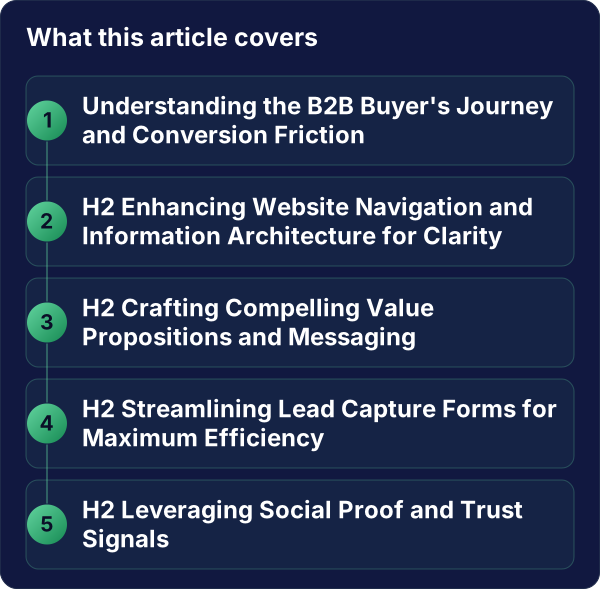
H2: Enhancing Website Navigation and Information Architecture for Clarity
A well-structured website is the foundation of effective B2B conversion optimization. Prospects should be able to quickly and intuitively find the information they need to evaluate your solution.
H3: Intuitive Navigation Menus
- Logical Grouping: Group related pages under clear, concise menu items (e.g., “Product,” “Solutions,” “Resources,” “Company,” “Pricing”).
- Clear Labels: Use unambiguous language. Avoid jargon or internal company terms.
- Prominent Search Bar: For complex sites, a visible and effective search function is essential.
- Sticky Navigation: Keep the navigation menu visible as users scroll, ensuring they can always navigate.
H3: Streamlined Information Architecture
- User-Centric Content Mapping: Map out your content based on the typical questions and stages of your ideal customer profile (ICP).
- Clear Call-to-Actions (CTAs): Each page should have a primary CTA that guides the user to the next logical step in their journey. For example, a product feature page might lead to a “Request a Demo” CTA.
- Organized Resource Centers: For whitepapers, case studies, and blog posts, ensure a logical categorization and easy filtering system. This builds authority and provides valuable content for lead nurturing.
KPIs to Track: Bounce Rate on Key Pages, Time on Site, Pages Per Session, Exit Rate on Navigation Elements.
H2: Crafting Compelling Value Propositions and Messaging
Your value proposition is the cornerstone of your B2B conversion optimization. It must clearly articulate the problem you solve, the benefits you offer, and why you are the best solution for your target audience.
H3: Clearly Articulating the “Why”
- Problem-Solution-Benefit Framework: Clearly state the pain point your ICP experiences, how your software solves it, and the tangible benefits they will achieve (e.g., increased efficiency, reduced costs, improved revenue).
- Targeted Messaging: Tailor your messaging to different segments of your ICP. What resonates with a CTO might differ from what resonates with a Marketing Manager.
- Quantifiable Outcomes: Whenever possible, use numbers and data to demonstrate the impact of your solution. Instead of “improves efficiency,” say “reduces task completion time by 30%.”
H3: Optimizing Landing Pages for Conversion
Landing pages are critical conversion points. They should be focused, clear, and designed to drive a specific action.
- Headline Alignment: The headline must directly address the user’s intent and match the ad or link they clicked.
- Concise Copy: Get straight to the point. Highlight key benefits and features.
- Strong Visuals: Use high-quality images or videos that showcase your product in action.
- Single, Clear CTA: Avoid multiple competing CTAs. Guide the user to one desired action.
- Trust Signals: Include testimonials, logos of well-known clients, security badges, and awards.
KPIs to Track: Landing Page Conversion Rate, Lead Quality Score, Time to Conversion.
H2: Streamlining Lead Capture Forms for Maximum Efficiency
Forms are a necessary evil in B2B lead generation, but they can be a significant source of conversion friction. Effective B2B conversion optimization involves making them as painless as possible.
H3: Form Field Optimization
- Minimize Fields: Only ask for essential information. For initial lead capture, consider fields like Name, Company Name, and Email. You can gather more detailed information later during the sales process.
- Conditional Logic: Use conditional logic to show or hide fields based on previous answers, making the form feel more personalized and less overwhelming.
- Clear Field Labels and Placeholder Text: Ensure labels are descriptive and placeholder text offers guidance.
- Inline Validation: Provide real-time feedback on form errors, helping users correct mistakes immediately.
H3: Form Placement and Design
- Prominent Placement: Place forms strategically on relevant pages (e.g., contact page, demo request page, resource download pages).
- Above the Fold: For high-intent pages, consider placing the form above the fold.
- Visual Appeal: Design forms to be visually consistent with your brand and easy to read.
- Progress Indicators: For multi-step forms, a progress indicator can reduce perceived effort.
KPIs to Track: Form Submission Rate, Drop-off Rate by Field, Lead Conversion Rate from Form Submissions.
H2: Leveraging Social Proof and Trust Signals
In B2B, trust is paramount. Prospects are making significant investments and need to be confident in your solution and your company’s reliability. B2B conversion optimization heavily relies on building this trust.
H3: Powerful Testimonials and Case Studies
- Show, Don’t Just Tell: Feature testimonials from recognizable companies and include photos or videos of the individuals.
- Quantifiable Results: Highlight specific metrics and ROI achieved by your clients.
- Diverse Use Cases: Showcase case studies that represent different industries and use cases relevant to your target audience.
- Video Testimonials: These are highly engaging and build a strong emotional connection.
H3: Demonstrating Authority and Credibility
- Client Logos: Display logos of reputable companies that use your software.
- Industry Awards and Recognition: Showcase any accolades your product or company has received.
- Security Badges: For SaaS products, especially those handling sensitive data, prominently display security certifications (e.g., SOC 2, ISO 27001).
- Partnerships: Highlight strategic partnerships with other reputable companies.
KPIs to Track: Engagement with Testimonial/Case Study Sections, Lead Source Quality from Trust Signal Pages, Website Credibility Scores (if measured).
H2: Optimizing for Mobile and Multi-Device Experiences
The modern B2B buyer is often on the go. A seamless experience across all devices is no longer a nice-to-have; it’s a necessity for effective B2B conversion optimization.
H3: Responsive Design is Non-Negotiable
- Fluid Grids and Flexible Images: Ensure your website adapts gracefully to different screen sizes.
- Touch-Friendly Navigation: Buttons and links should be large enough to be easily tapped.
- Optimized Content Readability: Text should be legible without excessive zooming.
H3: Mobile-Specific UX Considerations
- Simplified Forms: Mobile forms should be even more concise.
- Click-to-Call Functionality: Make it easy for mobile users to call your sales team directly.
- Fast Loading Times: Mobile users are less patient. Optimize images and code for speed.
- Location-Based Services (if applicable): If your software has a location-based component, ensure it functions flawlessly on mobile.
KPIs to Track: Mobile vs. Desktop Conversion Rates, Mobile Bounce Rate, Mobile Page Load Speed.
Checklist: Implementing B2B Conversion Optimization for Pipeline Growth
To effectively implement B2B conversion optimization and see a tangible impact on your pipeline, follow these steps:
- Define Your ICP and Buyer Personas: Understand who you are targeting and their specific needs and pain points.
- Map the Buyer’s Journey: Identify the key stages and touchpoints a prospect goes through.
- Conduct a UX Audit: Analyze your website and digital assets for friction points using analytics and user feedback tools.
- Prioritize Optimization Opportunities: Focus on areas with the highest potential impact on your pipeline (e.g., high-traffic landing pages, critical form submissions).
- Develop Hypotheses: Based on your audit, form clear hypotheses for A/B tests (e.g., “Changing the CTA button color from blue to green will increase demo requests by 10%”).
- Implement A/B Tests: Use A/B testing tools to validate your hypotheses and measure the impact of changes.
- Iterate and Refine: Conversion optimization is an ongoing process. Continuously analyze data, test new ideas, and refine your strategies.
- Integrate with Sales and Marketing: Ensure your optimization efforts are aligned with your sales and marketing teams to provide a cohesive prospect experience.
- Track Key Metrics: Regularly monitor your KPIs to measure progress and identify new areas for improvement.
Conclusion: Driving Pipeline Growth Through Strategic UX
In the complex world of B2B software, B2B conversion optimization is not a one-time project but a continuous strategic imperative. By focusing on user experience, you can systematically remove friction, build trust, and guide prospects more effectively through their decision-making process. From intuitive navigation and compelling value propositions to streamlined forms and robust trust signals, every UX improvement contributes directly to a healthier, more robust sales pipeline.
For product leaders and CTOs who are serious about accelerating growth and maximizing their market potential, investing in expert B2B conversion optimization is essential. It’s about making your digital presence work harder for your business, turning more visitors into valuable leads and, ultimately, loyal customers.
At Alken, we specialize in helping B2B SaaS companies like yours unlock their growth potential through data-driven UX and conversion optimization strategies. We understand the nuances of the B2B buyer’s journey and are dedicated to implementing solutions that deliver measurable results for your pipeline.
Ready to transform your website into a powerful lead generation engine?
Contact us today at info@alken.dev to discuss how we can help you achieve your B2B conversion optimization goals.