Digital product onboarding: how to reduce time-to-value
Master digital product onboarding to slash time-to-value, boost activation, and drive early retention. Essential for product leaders.
In today’s competitive digital landscape, the initial user experience with a new product is paramount. For B2B software targeting agencies and startups, a seamless and effective digital product onboarding process isn’t just a nice-to-have; it’s a critical driver of adoption, activation, and long-term retention. The faster your users experience the core value of your product, the more likely they are to become loyal, paying customers. This article delves into the strategies and best practices for optimizing your digital product onboarding to significantly reduce time-to-value (TTV).
The Criticality of Time-to-Value in Digital Product Onboarding
Time-to-value (TTV) is the duration it takes for a user to realize the primary benefit or value proposition of your product. For B2B software, this often means achieving a specific outcome, completing a key task, or integrating the product into their existing workflow. A long TTV can lead to user frustration, abandonment, and ultimately, churn. Conversely, a short TTV creates a positive first impression, reinforces the purchase decision, and sets the stage for deeper engagement.
Why TTV Matters for B2B Software
- Reduced Churn: Users who quickly see value are less likely to seek alternatives. Studies consistently show a strong correlation between effective onboarding and lower churn rates. For instance, a report by Gainsight found that companies with strong onboarding programs experience 15% higher customer retention.
- Increased Adoption & Activation: When users understand how and why to use your product, they are more likely to adopt its features and reach the “aha!” moment – the point where they fully grasp its utility.
- Faster ROI for Customers: B2B clients invest in software to solve problems and achieve business goals. A swift TTV means they can start realizing their return on investment (ROI) sooner, justifying their expenditure and fostering advocacy.
- Lower Support Costs: A well-guided onboarding experience preempts common questions and reduces the burden on your support teams. Users who are self-sufficient from the start require less hand-holding.
- Competitive Advantage: In a crowded market, a superior onboarding experience can be a key differentiator, attracting and retaining clients who might otherwise opt for a competitor.
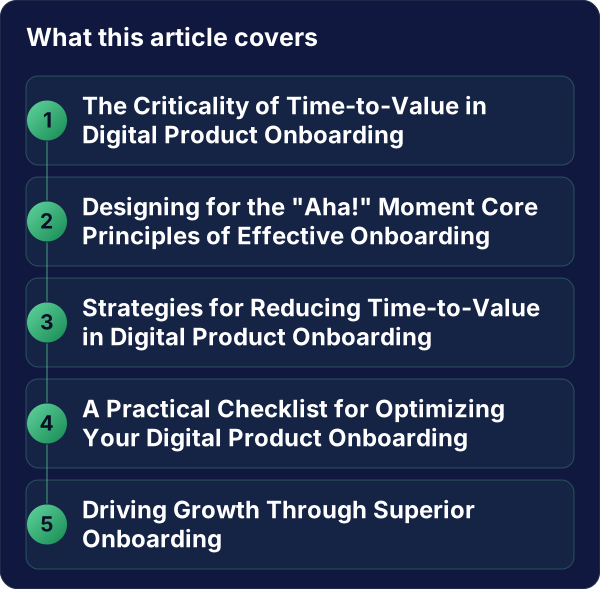
Designing for the “Aha!” Moment: Core Principles of Effective Onboarding
The “aha!” moment is the epiphany a user has when they finally understand the core value your product delivers. Identifying and engineering your digital product onboarding to lead users directly to this moment is the ultimate goal.
1. Understand Your User’s Journey and Goals
Before you can design an onboarding flow, you need to deeply understand your target audience.
- Persona Development: Create detailed user personas that go beyond demographics. Understand their pain points, motivations, technical proficiency, and desired outcomes from using your software.
- Job Stories: Frame user needs using the “When [situation], I want to [motivation], so I can [expected outcome]” format. This helps focus on the “why” behind user actions.
- Map the User Journey: Visualize the steps a new user takes from signing up to achieving their first significant win with your product. Identify potential friction points and opportunities for guidance.
2. Prioritize Core Functionality and Value
Not all features are created equal, especially for a new user. Your onboarding should focus on guiding them to the features that deliver the most immediate and impactful value.
- Identify the “Hero” Feature: What is the single most important task or outcome a user needs to achieve to experience your product’s core value? This should be the centerpiece of your onboarding.
- Progressive Disclosure: Avoid overwhelming users with every single feature. Introduce functionality gradually as they become more familiar and their needs evolve.
- Goal-Oriented Flows: Design onboarding sequences that are directly tied to achieving specific user goals. For example, if your product helps manage social media campaigns, the onboarding might guide users through setting up their first campaign.
3. Leverage Data and Analytics to Iterate
Effective onboarding is not a set-it-and-forget-it process. It requires continuous monitoring and optimization.
- Key Metrics to Track:
- Completion Rate: Percentage of users who complete key onboarding steps.
- Time-to-First-Action: How long it takes users to perform a critical action (e.g., create their first project, send their first message).
- Feature Adoption Rate: Percentage of users who engage with core features post-onboarding.
- TTV: Directly measure the time it takes for users to achieve predefined value milestones.
- Activation Rate: Percentage of users who reach a defined activation point (e.g., complete 3 core tasks).
- Early Churn Rate: Monitor churn within the first 7, 30, or 90 days.
- A/B Testing: Experiment with different onboarding flows, messaging, and UI elements to see what resonates best with your users.
- User Feedback: Actively solicit feedback through surveys, in-app prompts, and user interviews to understand pain points and areas for improvement.
Strategies for Reducing Time-to-Value in Digital Product Onboarding
Implementing specific tactics can dramatically shorten the path to value for your users.
1. Streamline the Sign-Up and Setup Process
The initial hurdle can be a significant barrier. Make it as frictionless as possible.
- Minimize Required Fields: Only ask for essential information during sign-up. You can gather more data later.
- Social Logins/SSO: Offer convenient login options to reduce friction.
- Clear Value Proposition Upfront: Reiterate the benefits of signing up and what they can expect to achieve quickly.
- Automated Setup & Integrations: If your product requires integrations, automate as much of the setup as possible. Provide clear, step-by-step guidance for any manual steps. For example, if your B2B SaaS connects with CRM systems, offer pre-built connectors and wizards.
2. Implement Interactive Walkthroughs and Tooltips
Guide users directly within the product interface.
- Product Tours: Use short, focused tours to introduce key features and workflows. Avoid lengthy, overwhelming tours.
- Contextual Tooltips: Provide helpful hints and explanations that appear when a user hovers over or interacts with specific elements.
- Checklists: A visual checklist of onboarding tasks can provide a sense of progress and accomplishment. Users can see what they need to do and tick off completed items. This is a powerful tool for digital product onboarding.
- Interactive Tutorials: Instead of just showing, let users do. Guide them through performing actual tasks within a safe, guided environment.
3. Personalized Onboarding Experiences
Tailor the onboarding to individual user needs and roles.
- Role-Based Onboarding: If your software serves different user roles (e.g., admin, editor, viewer), offer distinct onboarding paths for each.
- Goal-Based Personalization: Ask users about their primary goals during sign-up or early in the onboarding process and then tailor the experience accordingly.
- Segmentation: Use data to segment users and deliver targeted onboarding content and feature introductions.
4. Provide Accessible and Comprehensive Help Resources
Empower users to find answers when they need them.
- Knowledge Base: A well-organized and searchable knowledge base with articles, FAQs, and video tutorials is essential.
- In-App Help Widget: Integrate a help widget that allows users to search the knowledge base or contact support directly from within the application.
- Video Tutorials: Short, digestible video tutorials demonstrating key features and workflows can be highly effective.
- Community Forums: Foster a community where users can ask questions and help each other.
A Practical Checklist for Optimizing Your Digital Product Onboarding
To ensure your digital product onboarding is effective, consider this actionable checklist:
Pre-Onboarding & Sign-Up
- Clearly articulate the core value proposition on the landing page and during sign-up.
- Minimize the number of fields required for account creation.
- Offer convenient sign-up options (e.g., Google, LinkedIn, SSO).
- Set clear expectations about what the user will achieve during onboarding.
First Login & Initial Experience
- Greet users warmly and acknowledge their arrival.
- Immediately guide users towards their first “win” or core task.
- Implement a concise, interactive product tour focusing on essential features.
- Utilize tooltips for contextual guidance on key UI elements.
- Offer a clear onboarding checklist to show progress and next steps.
Core Activation & Value Realization
- Design onboarding flows that are goal-oriented and task-specific.
- Prioritize features that directly contribute to the user’s primary objective.
- Use progressive disclosure to introduce advanced features gradually.
- Provide opportunities for users to practice core functionalities.
- Offer personalized onboarding paths based on user role or stated goals.
Ongoing Engagement & Support
- Ensure easy access to a comprehensive knowledge base and FAQs.
- Integrate an in-app help widget for quick support.
- Provide readily available video tutorials for complex tasks.
- Proactively offer tips and guidance as users explore the product.
- Solicit feedback on the onboarding experience through surveys or in-app prompts.
Measurement & Iteration
- Define and track key onboarding metrics (completion rates, TTV, activation rates).
- Regularly analyze user behavior data to identify drop-off points.
- Conduct A/B tests on different onboarding elements and flows.
- Use user feedback to inform iterative improvements to the onboarding process.
Conclusion: Driving Growth Through Superior Onboarding
In the competitive B2B software market, a well-executed digital product onboarding process is no longer a luxury but a necessity for success. By focusing relentlessly on reducing time-to-value, you empower your users to experience the full potential of your product faster, leading to increased activation, higher retention, and ultimately, sustainable growth.
At Alken, we specialize in crafting bespoke B2B software solutions for agencies and startups, with a keen focus on optimizing the user journey from the very first interaction. We understand that a seamless digital product onboarding experience is the bedrock of customer loyalty and product adoption. Our data-driven approach ensures that your users don’t just sign up – they become engaged, successful advocates for your brand.
Ready to transform your user onboarding and accelerate your product’s time-to-value? Let’s build a solution that drives engagement and retention from day one.
Contact us today at info@alken.dev to discuss how we can elevate your digital product onboarding strategy.